
Roland have announced the launch of their new HS5 session mixer. For ‘session mixer’, read ‘headphone amplifier’ or, as those of us working in music education know only too well, read ‘JamHub’!
JamHubs have proved popular in music education setting across the UK. Sadly, they are not the most robust of technologies and require quite a bit of tinkering to work effectively in the context of a busy classroom. This extends to the purchase of specific TRS cabling, adapters, interfaces for guitars to boost their signal and various other bits and pieces. There are often problems related to signal strength and, of course, the mono/stereo mapping which often ends up with students only hearing things in one ear! The JamHub itself is not the most robust of technologies either, with fragile knobs and sockets which wear quickly and can be easily damaged by enthusiastic pupils pulling on cables.
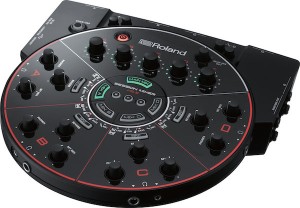 The HS5 will change all this. So, what are some of the key similarities and differences?
Like the JamHub, the HS-5 will up to five musicians to rehearse, play, and record whilst monitoring each other through headphones. Players have individual hands-on control of their personal mix, plus access to reverb and, unlike the JamHub, COSM® effects for guitar, bass, and vocals.
Unlike the JamHub, the HS-5 provides access to guitar and bass amp modelling on four independent channels. This means that players can connect their electric guitar or bass directly into the HS-5 and jam with the same sound and feel as playing through an amp. This is an amazing advantage for a music education setting.
Unlike the JamHub, groups can capture stereo recordings directly to a USB thumb drive, or connect the HS-5 to a computer via a USB cable and record each channel to individual tracks in a DAW (this is something that can only be done by purchasing JamHub’s additional Tracker MT16 unit.). This powerful combination of recording technologies creates an incredibly simple and versatile system for creating complete ensemble recordings. It also creates a unique bridge between students’ live performance work and their compositional and post-production working environment within whatever DAW you are using (hopefully something with the ease and functionality of PreSonus’ StudioOne).
Vocalists can also benefit from an enhanced, studio-quality sound via the built-in compressor for each microphone input. With the intuitive panel controls, HS-5 users can quickly adjust EQ and pan settings and dial in just the right amount of amount of guitar distortion or vocal compression.
Unlike the JamHub, the HS-5’s snapshot function allows you to save all the unit’s current settings to a USB thumb drive. This lets the entire group resume performances right where you left off—even at a totally new location or a much later date. This will be a fantastic feature for classroom use and will allow students to resume their work with the HS5 quickly and easily throughout a sequence of lessons.
Like the JamHub, the HS-5 allows every musician in a group to set up their own independent monitor mix using the Mix A thru Mix D switches located in the centre of the unit. Once an overall mix has been decided, musicians can use the My Mix knob to adjust the volume of their own mic or instrument, and they can also add ambience independently with their channel’s Reverb knob. Unlike the JamHub, current settings are clearly displayed with LEDs encircling the knobs, making it easy to check the status while playing.
Unlike the JamHub, for larger groups, two HS-5 can be connected in tandem to accommodate up to eight musicians.
So, the new HS5 is built by Roland, a company whose heritage is legendary, whose track record is innovative, whose products are robust offering the musician great sounds, brilliant technological infrastructure and ease of use.
UCan Play can supply you with any of the JamHub technologies and Roland’s HS5. Pre-ordering is advisable for supply later this term.




Recent Comments